

A close friend of mine, Marcus William Oliveira, CEO of Circular Brain, recently went down a deep and very long ChatGPT thread exploring the limits of our understanding of the universe: the laws of physics, our relationship with space-time, causality, the origin of the universe, and where an intelligent Designer might fit into all of this. I couldn’t resist joining the conversation. We tested ideas, pushed the discussion further, and ended up continuing it over the phone, challenging assumptions and genuinely enjoying the process.
The next day, mostly out of curiosity and for fun, I asked ChatGPT to create a humorous text mixing those philosophical discussions with the concept of DPP. I wasn’t expecting much but the result surprisingly revealed some interesting connections. I adjusted, shaped, and expanded those ideas into the reflections below. I hope you find them as thought-provoking (and entertaining) as I did.
So, what if a product were a conscious being in the universe, subject to the laws of physics, time and space…and the Digital Product Passport (DPP) serving to shape its identity and purpose?
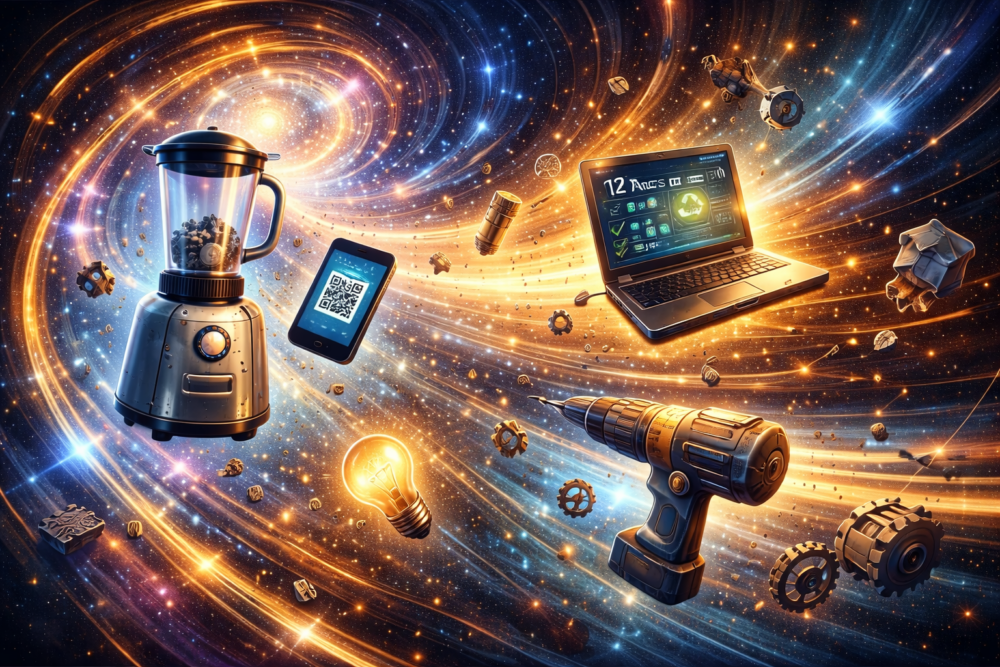
In this scenario, the Digital Product Passport would not only record the origin of materials and products, maintenance history, and other life-cycle information, but also the product’s existential condition in space-time.
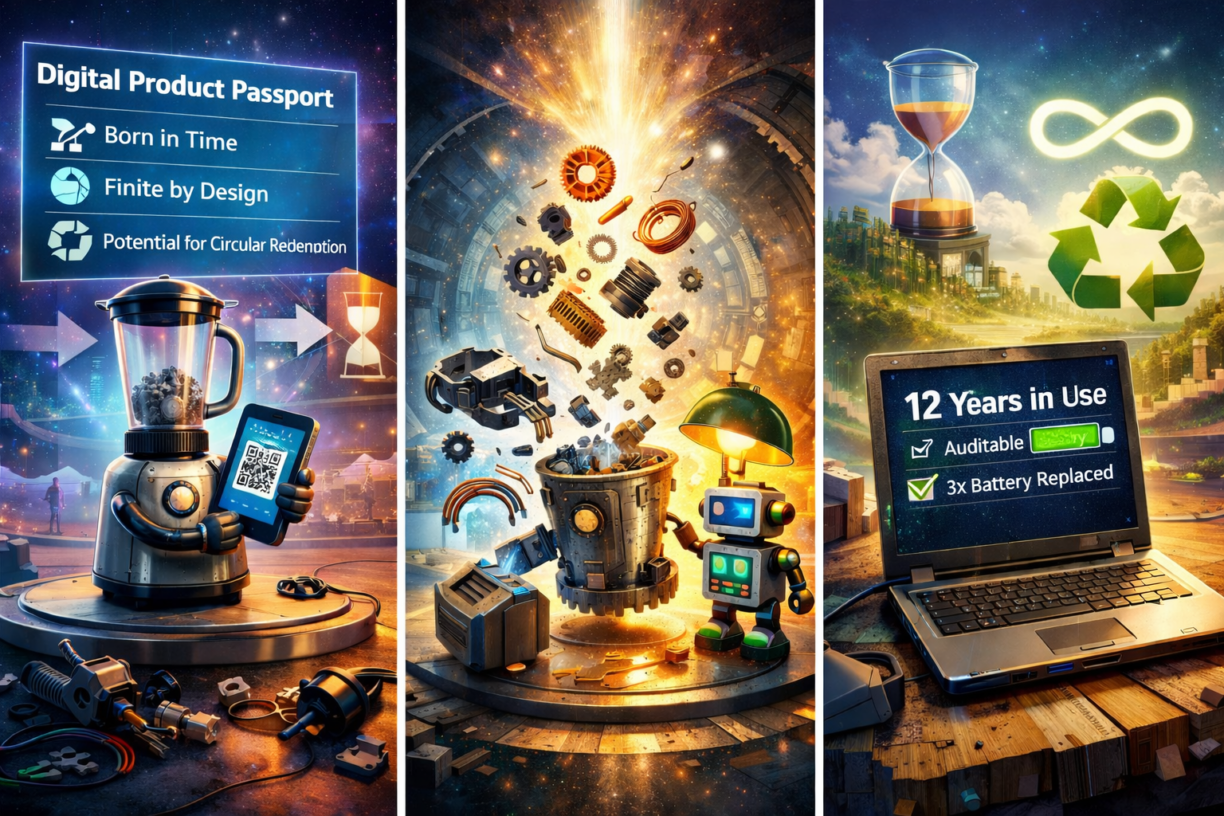
A blender is born, receives a unique QR code, and there it reads: “Created in time. Finite by design. With potential for circular redemption.”
Each use leaves an ontological mark. A well-made smoothie deepens its identity. An electrical overload brings it closer to the end (also known as technical assistance, or proper disposal).
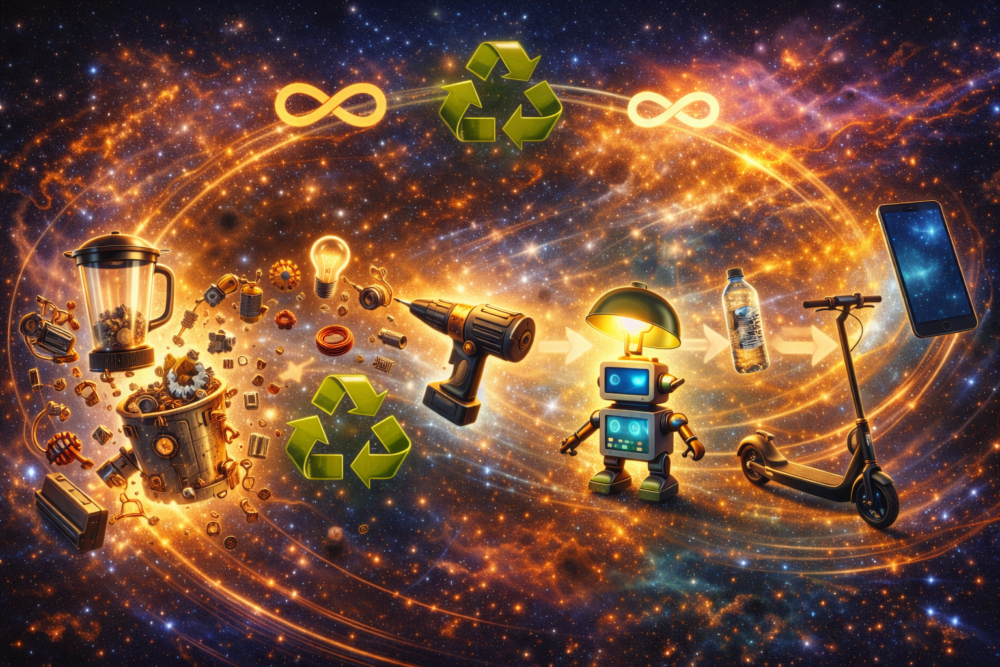
When it breaks, it is not the end. It is a transition. Its components enter a kind of material eonicity: they continue to exist in time, “learning” new ways to interact with other components. Now as recycled copper, reused screws, or plastic reborn into something entirely unexpected.
Eternity, of course, remains reserved for God. For products, something more modest but still attainable remains: to exist indefinitely in time, as long as they respect the moral grammar of the value chain: traceability, transparency, and sound decisions throughout the life cycle.
The true freedom of a product is not escaping time or wear. It is not being discarded prematurely.
In the end, perhaps the greatest miracle is not eternal life, but a laptop with many years of use, components replaced a few times, an auditable history…and still fully aware of who it once was.
Does this make sense to you? Or is it just circular economy philosophy taken a bit too far? 🤓
Solutions, projects and strategy related to DPP is something I’m personally investing a lot of time lately. This is becoming a reality not just in Europe, where the concept was born, but in many countries exporting to this region. It is becoming a reality also for many companies around the world exploring into new business opportunities around traceability, transparency and circularity.
Whatever you are just a DPP enthusiast, a researcher curious about the subject, or professional trying to implement these concepts in your company, get in touch with us!